E-mail: sales001@bosschemical.com JINAN BOSS CHEM CO.,LTD
Telephone: +86-15628782329

- All
- Product Name
- Product Keyword
- Product Model
- Product Summary
- Product Description
- Multi Field Search
 |


128-04-1
bosschem
128-04-1
Product Name: Fumei Sodium
English alias: Sodium dimethyldithiocarbamate; Dimethyldithiocarbamic acid sodium salt; Sodium N,N-dimethyldithiocarbamate; SDDC
CAS number: 128-04-1
Molecular formula: C₃H₆NNaS₂
Appearance: White to pale yellow crystalline powder at room temperature, appearing as a pale yellow transparent liquid (in the form of an aqueous solution)
Conventional packaging: 25kg/bag; 50kg/barrel; 200kg/barrel; 1000kg/IBC container drum
Fumei Sodium is an organic sulfur sodium salt generated by the meridian reaction of dimethylamine, carbon disulfide, and sodium hydroxide. It belongs to the category of dithiocarbamate compounds, characterized by the presence of dithiocarbamate ions and sodium ions (Na ⁺) in its molecular structure, possessing strong chelating and reducing properties. It has excellent chemical activity and can quickly form stable insoluble chelates with various heavy metal ions (such as copper, mercury, lead, cadmium). At the same time, it has good stability under alkaline conditions and is easily decomposed into carbon disulfide and dimethylamine in acidic environments.

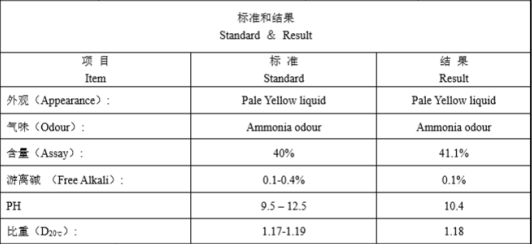
Fumei sodium belongs to low toxicity substances, with acute oral toxicity (LD50)>1000mg/kg (rat, solid)
Water solution products should avoid low-temperature freezing (freezing may cause packaging breakage), and the storage temperature in winter should not be lower than 5 ℃.
200kg/water solution tank: The stacking height should not exceed 2 layers, and a leak proof tray should be placed on the bottom layer to avoid inversion or tilting and prevent valve damage and leakage.
Ultraviolet-Vis Spectrophotometry (UV-Vis)
Infrared Spectroscopy (IR/FTIR)
Atomic Absorption Spectroscopy (AAS)
X-ray Fluorescence Spectroscopy (XRF)
Nuclear Magnetic Resonance Spectroscopy (NMR)
Gas Chromatography (GC)
High Performance Liquid Chromatography (HPLC)
Ion Chromatography (IC)
Thin Layer Chromatography (TLC)
GC-MS / LC-MS/MS: Qualitative and Quantitative Analysis
ICP-MS: Trace Metal Elements (ppb Level)
TOF-MS: Precise Molecular Weight Determination


